Showing posts with label 2010 - Longlist (F). Show all posts

Friday, September 14, 2012

Rachel's Review of The Help


Orange Prize Longlist 2010: The Help, by Kathryn Stockett 

My Review 4/5stars
The Help was a well-written novel with an engaging (and endearing) story. Skeeter, a young Southern belle just returned home from college decides to cross racial boundaries and write a controversial book about how difficult it is being an African American maid in a white household in Mississippi. She doesn’t realize when she starts just how dangerous such a book could be. I think this book has an excellent theme (anti-racism and the pettiness of Southern White women in the 1960’s). However, it is very difficult to write a book about racism without making the defining feature of every character his or her race. This problem leads to excessive racial stereotyping—which is a pretty serious issue in this book. (The racial stereotyping applies to both whites and African Americans in this situation). Despite this problem, however, I think the book is worth reading for the sake of the story. 

This review is reposted from my blog: Resistance is Futile.

Monday, July 16, 2012

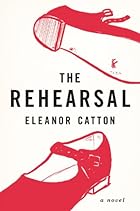
The Rehearsal by Eleanor Catton (Jill)

The Rehearsal by Eleanor CattonThe Rehearsal
By Eleanor Catton
Completed July 15, 2012

I was interested in reading The Rehearsal because it's set primarily at an all-girls' high school. As a graduate of an all-women's college, I think the social dynamic of a single-sex educational institution could make a stellar background for a story. And for The Rehearsal, it does provide an interesting foundation, but The Rehearsal didn't focus strictly on the relationship among young women. It was more artsy and cerebral.

The book revolves around a sex scandal between a student and her jazz teacher. The scandal rocks the small campus, disrupting the trust between parents and teachers; students and fellow students; and students and their instructors. Interestingly, the betrayal felt by the students was most startling. The student, Victoria, kept the affair from her friends, and when Victoria returns to school, her friends told her that to be forgiven, she must divulge the details about her affair. Is that a natural reaction? I am not sure.

Meanwhile, Catton throws in two other storylines - that of Stanley, a first-year student at a prestigious drama school, and the saxophone teacher, who is connected to many of the students affected by the sex scandal. (Side note: The conversations between the saxophone teacher and her students' parents were entertaining as heck). All three storylines combine at the end - albeit abruptly - to wrap this story up like a bow.

Here's my main complaint about The Rehearsal: the artful, intelligent aspects of this novel felt contrived - like when you're speaking to someone who talks about classical music just to give you the impression he's intelligent. The story was there; the characters were multi-dimensional and the writing style was provocative. The Rehearsal is Catton's first novel, and I suspect she'll get better and better with time. In the meantime, I will continue to look for books set at all-women's schools and colleges, searching for an intelligent, realistic representation of this unique social situation. If have any suggestions, please let me know. (  )

Sunday, September 18, 2011

Laura's Review - The Little Stranger

The Little Stranger is a good old-fashioned gothic mystery set in the 1940s, in an old and stately English house which is just as much a character as the Ayers family who inhabits it. We first "meet" Hundreds Hall through Robert Faraday, a local doctor whose mother worked in service at Hundreds when he was young. Some thirty years later, he is called out to care for one of the maids, who has fallen ill. There he also meets Mrs. Ayers and her adult children, Roderick and Caroline. The family has come on hard times since Mrs. Ayers became a widow. Roderick is struggling to cope with the estate he inherited. Money is scarce, and the family has been faced with difficult decisions to make ends meet.

Dr. Faraday offers to treat Roderick's war injury with an experimental procedure, free of charge. And thus he inserts himself into the life of Hundreds Hall, and gets all up in their business. He worries endlessly about Mrs. Ayers, and begins to fancy Caroline. At least that's what he tells us, because Robert is the story's narrator. He spends more and more time at Hundreds Hall. When Mrs. Ayers decides to give a party, the first in years, he finds himself on the guest list -- unusual due to their different social classes. Things begin to unravel at the party, when the family dog Gyp bites a young guest and leaves her severely disfigured. Progressively weirder things happen, with progressively greater impact on the emotional well-being of the Ayers family members. And Hundreds Hall falls into an even greater state of disrepair. It appears some sort of ghost is terrorizing the household, and it's very creepy indeed.

I was constantly torn while reading this book. My literary mind wanted to believe there was a ghost because after all, this is a gothic mystery/ghost story. My rational, analytical side dismissed that as nonsense and looked for a rational, analytical cause for all these mishaps. When I finished the book, I still wasn't sure. The ending is such that Waters might have given me the rational answer, which gave the story a chilling psychological thriller angle. Or she didn't, and there was just a lot of inexplicable weird and creepy stuff going on. If I could rewrite the ending, I know what I'd do. But I can't tell you; you'll have to read this book and form your own conclusions. I ended up docking my rating 1/2 star because it all left me rather frustrated.


Cross-posted from my blog

Wednesday, August 3, 2011

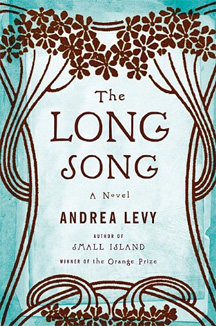
The Long Song - Wendy's Review

Kitty turned to face her master.

‘Come along, Caroline. Hurry. We need to get out of the sun.’

‘Can I take her?’ she asked.

Kitty tried to seize air enough to breathe.

‘Yes, if she’ll amuse you. She would be taken soon enough anyway. It will encourage her to have another. They are dreadful mothers, these negroes.’

‘She’ll be my companion here,’ Caroline said. ‘I could train her for the house, or to be my lady’s maid.’ – from The Long Song, page 41 -

July is born in the early part of the nineteenth century on a Jamaican sugar plantation. Her mother is a black slave, her father the white overseer who is her mother’s rapist. One hot day when July is still just a young child, she is noticed by Caroline Mortimer, the sister of the plantation’s owner who has arrived from England. On a whim, Caroline decides to take July to be her companion, stealing her from July’s mother without a second thought and renaming her Marguerite. The Long Song is July’s story, narrated retrospectively by an adult July many years later. It is not an easy story, spanning decades and taking the reader through the tumultuous years of the Baptist War and the controversial end to slavery in Jamaica. But, it is July’s voice which drives the narrative. Funny, cynical, highly observant and intelligent, July weighs in on racism, violence, and the struggle for freedom at a time when blacks were viewed as property to rich, white landowners.

Only with a white man, can there be guarantee that the colour of your pickney will be raised. For a mulatto who breeds with a white man will bring forth a quadroon; and the quadroon that enjoys white relations will give to this world a mustee; the mustee will beget a mustiphino; and the mustiphino…oh, the mustiphino’s child with a white man for a papa will find each day greets them no longer with a frown, but welcomes them with a smile, as they at last stride within this world as a cherished white person. – from The Long Song, page 203 -

The Long Song is a brilliant novel narrated by an unforgettable character. July is, perhaps, one of the most memorable female voices I have read in a long, long time. Bittersweet, funny, often devastating…this is a novel which drew me in immediately and held me in its grip to the final page. Andrea Levy writes with an honesty and insight into the human condition that takes one’s breath away.

The Long Song was shortlisted for the 2010 Booker Prize, longlisted for the 2010 Orange Prize for Fiction, a finalist for the 2011 Commonwealth Writers Prize, and named as a 2010 New York Times Most Notable book. It is, in my opinion, worthy of all these accolades. Beautiful prose, enduring characters, and the evocation of place that vibrates off the page, all combine to create a remarkable novel of historical significance.

Readers who love literary fiction and historical fiction will want to put The Long Song on their must read list.

Highly recommended.

  • Quality of Writing:
  • Plot:
  • Characters:
Overall Rating:

Tuesday, July 19, 2011

The Personal History of Rachel DuPree by Ann Weisgarber (Jill)


The Personal History of Rachel DuPree
By Ann Weisgarber
Completed July 18, 2011

Rachel Reeves was a strong-willed, hard-working woman from Chicago who wanted a better life for herself, including marrying a man with "ambition." When her boss's son, Isaac DuPree, came home on leave from the Army, Rachel knew she met the man she wanted to marry. Isaac was determined to improve his lot in life by planning to move to South Dakota to become a rancher. Rachel, seeing her ticket out, approached Isaac about marrying her to help him claim more land - an offer he couldn't refuse. It was then that she became Rachel DuPree - and her personal history as a black wife of a South Dakota rancher came alive on the page.

Rachel's story about living in the harsh conditions of South Dakota was mesmorizing. At the time of the story, her ranch was experiencing a severe drought, and she worried about food and water for her family (which included four children and one on the way). As conditions worsened, Rachel began to yearn for life back in Chicago. For Isaac, though, returning home meant failure - he wouldn't even consider it. Rachel began to ponder her choices, deeply torn between her children and her marriage.

A deep undertone to The Personal History of Rachel DuPree was racism. As a black family, the DuPrees experienced racism in South Dakota, but what was more pronounced was the racism toward Native Americans. Additionally, there was racism among the African Americans, where Northern blacks discriminated against blacks from the South. This book was an eye-opening look at the various forms of racism that plagued the U.S. in the early 20th century.

With its strong characters and themes, A Personal History of Rachel DuPree is a worthwhile read for anyone who likes stories that examine social issues. It was longlisted for the Orange Prize in 2010 and shortlisted for the Orange Award for New Writers. It's definitely worthy of its accolades, and I look forward to more fiction by Ann Weisgarber. ( )

Monday, August 16, 2010

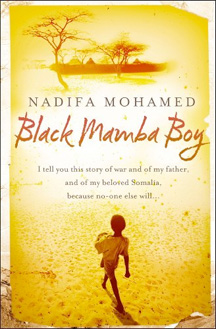
Nadifa Mohamed's Black Mamba Boy

Nadifa Mohamed's Black Mamba Boy
Harper Collins, 2010

And it's a story that I think hasn't been told before": that’s how Nadifa Mohamed describes her first novel,
Black Mamba Boy in this video.

Maybe that’s a tall order for a novel in 2010. And, then again, maybe not.

Consider this. In 1990, the Columbian Ministry of Culture set up an itinerant library, whereby donkeys carted practical tomes on agricultural techniques, water filtration, veterinary medicine, and sewing patterns to serve distant rural populations. The books were made available centrally to villagers and, after a time, they were swapped out for new selections.

Each of these loaned books was returned properly when it was time for the exchange, until one village refused to return one book: The Iliad, which, eventually, was given to them to keep. “They explained that Homer’s story exactly reflected their own: it told of a wartorn country in which mad gods wilfully decide the fate of humans who never know exactly what the fighting is about, or when they will be killed.”*

Maybe the characters in Black Mamba Boy would believe Homer’s story exactly reflected their own. In fact, you can easily imagine Nadifa Mohamed’s characters in Djibouti, Eritrea, Somalia and Sudan making the same claim that the Columbia villagers made. And certainly this debut novel tackles epic themes (although I haven’t read The Iliad straight through, so I can’t offer more direct parallels than the villagers’ comments).

Nadifa Mohamed tells her father’s story through Jama: “I am my father’s griot, this is a hymn to him.” A griot is a wandering poet and storyteller, who is considered a repository of oral tradition in African countries, so it shouldn’t be surprising that Mohamed’s tale begs to be read aloud from the first page.

The attention she pays to descriptions that encapsulate a scene, the scarce bits of direct dialogue, the long phrases that follow one another like bread crumbs through the woods: I read more than half of this novel aloud, which also slowed me down, and I think that’s a good thing because despite the swath of time this novel covers, this prose doesn’t want to be rushed.

You would want to take your time anyway if the setting was unfamiliar, and there’s a map at the novel’s opening to help you place the characters and the events of the story. (Actually, I would have found a glossary helpful too, but I realize it would have put off some readers, and I managed okay without it.) Here’s a sample of the way that Nadifa Mohamed brings the land to life:

Djibouti was low-down and hot, it looked even more barren and fearsome than Somaliland and the few trees that dared exist held up their arms in defeat. Rocks cracked open in fifty degree heat. The earth was bleached white and the few comforts that the Somali desert shyly held out, blossoming cacti, large matronly bushes, lush candelabra euphorbia, were here maliciously denied. The air had a corruption to it, a mingled scent of sleaze, sweat and goat droppings. (79)

In some ways, however, the novel’s themes traverse geographic and cultural boundaries. For instance, above all, Jama longs for his mother and father, for a place to belong.

“Jama looked up at the sky, beside the moon was a bright star he had never noticed before, it flickered and winked at him. As Jama squinted he saw a woman sitting on the star, her small feet swinging under her robe and her arm waving down at him. Jama waved to his mother and she smiled back, blowing shooting star kisses down on him.”

“All those promises his mother had made about him being the sweetheart of the stars looked to him as if they would finally come to pass. He was going to be a normal boy with a real father, he wanted his father above anything else in the world, he was becoming a man and needed a father to light the way. Jama had so many questions for Guure. Where did you go? What have you being doing in Sudan? Why did you not come back for me? Jama felt ready to explode; his sentence was finally over.” (99)

But Jama’s sentence is not over; one hundred pages — one third of the way — into the narrative and, really, his search is just beginning. And, although it is epic in nature, although the tale strikes universal chords, what Nadifa Mohamed says is true: Jama’s story has not been told before. She explains that experiences like her father’s are “often written about but very rarely have their perspective represented” and she has brought that to Black Mamba Boy.

* This anecdote is relayed in Alberto Manguel’s The Library at Night (230), based on a personal interview conducted in Bogotá May 25, 2001. If you have one (a library), and don’t have a copy of this one (Manguel’s book), you should get one (978-0-676-97588-8). Right now.

PS I originally posted this to Buried In Print.

Andrea Levy’s The Long Song

Andrea Levy’s The Long Song
Hamish Hamilton, 2010

When I picked up my copy of The Long Song from the library, I hadn’t read any of Andrea Levy’s novels (this being her fifth), so I didn’t have any expectations.

That changed when I read the first paragraph, and almost immediately, because its first sentence is just the sort that I love: “The book you are now holding within your hand was born of a craving.”

See, this reminds me of some of my longtime-favourite quotes. Like this from Dionne Brand: “Writing is an act of desire, as is reading.” And this, from Nicole Brossard: “Reading is food.” (There are more bookish quotes if you browse the tabs above.)

So that first sentence of The Long Song made me smile. Yes, it definitely did. But not in a comfortable way, because this could be the magic of a good first line. No, I was smiling, but in a nervous way, like I’ve just been introduced to someone that someone else thinks I’ll really like, but I’m not entirely sure yet and the pressure is on.

And then I read: “My mama had a story — a story that lay so fat within her breast that she felt impelled, by some force which was mightier than her own will, to relay this tale to me, her son.”

Now, I realize that this conceit is not to everybody’s taste, but I love the Dear Reader convention. I love to be addressed, to have the space that is traditionally reserved for me be openly acknowledged. (Still quote-hungry? Here are some on that very subject.)

So my smile eased into something more comfortable. And, then, a few pages later, I find: “Reader, my son tells me that this is too indelicate a commencement of any tale. Please pardon me, but your storyteller is a woman possessed of a forthright tongue and little ink.”

Yes, please.

“Go to any shelf that groans under a weight of books and there, wrapped in leather and stamped in gold, will be volumes whose contents will find you meandering through the puff and twaddle of some white lady’s mind.”

No twaddle, thanks. This here is just fine. And more, please.

But then, halfway through the novel.

“And this is why I can go no further. This is why my story is at an end. For I know that my reader does not wish to be told tales as ugly as these. And please believe your storyteller when she declares that she has no wish to pen them. It is only my son that desires it. For he believes his mama should suffer every little thing again.”

:: insert remembered moment of reader’s panic ::

Don’t worry: I told you, it’s halfway through the novel. She keeps on with her story and I’ll be keeping on with Andrea Levy. Terrific storytelling!

What do you think of the Dear Reader approach? Do you find it welcoming or irritating? Have you read any of the author’s other novels or do you mean to? Do you have a particular favourite?

PS I know I’ve hardly said anything about the story but I don’t believe that anybody could tell it better than she did. Andrea Levy’s website offers details and an extract if you need more.
SPS I originally posted this to BuriedInPrint.

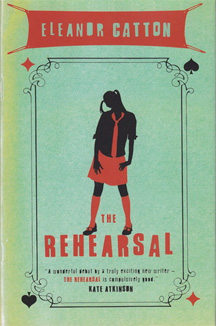
Eleanor Catton`s The Rehearsal

Eleanor Catton’s The Rehearsal (2008)
McClelland & Stewart, 2010

I felt like a teenager when I started reading this novel. I’d switched purses seasonally and forgot to transfer my housekeys, so I ended up sitting on the front porch for a few hours waiting for Mr. BIP to come home.

I forgot my keys a lot when I was a kid, so if I hadn’t already been a reader, I probably would have become one from the need to fill time whilst waiting for someone to come home and let me in.

I often stopped at the school library or the local library on my way home from high school, and I always had reading material at hand, and I had luckily stopped at the public library that afternoon for The Rehearsal, so my porch-sit was actually quite enjoyable.

(Actually, it was all the more so because I couldn’t possibly feel guilty for reading because I really had no other choice, not being able to get in to do the myriad of chores that I’d actually planned to do when I got home). It was a beautiful near-summer day and I pulled a bag of pistachios from my purse and nestled into the cushioned chair to read more than 250 pages — before heading down the block for an iced americano and the use of a pay phone.

It was a comfortable set-up, but not a comfortable read: Eleanor Catton’s The Rehearsal captures adolescence and coming-of-age-ness with an unflinching honesty. The complexity of her characterization is almost overwhelming at times and, appropriate to her characters’ world-revolves-around-me lifestage, everyday events and exchanges are observed and analyzed with a peculiar intensity.

“It is a mark of the depth of their wounding that they are pretending they suspected it all along. Everything that they have seen and been told about love so far has been an inside perspective, and they are not prepared for the crashing weight of this exclusion. It dawns on them now how much they never saw and how little they were wanted, and with this dawning comes a painful reimagining of the self as peripheral, uninvited and utterly minor.” (59)

It’s spot-on, isn’t it. Belonging and alienation, identity and searching, importance and insignificance: these are contrary times. The varying perspectives, the constant shifts in focus that underscore the larger question of what is real and what is portrayed, what exists and what is performed: it’s disorienting.

But “…you must start with a thing itself, not with an idea of a thing. I can see what I am holding in my hand. I can see its weight, its shape and its texture. It doesn’t matter if you can see it yet or not: the important thing is that I can.”

The Head of Movement at the drama school explains this, but I’m pulling it out to demonstrate that the same is true of Eleanor Catton: it doesn’t matter if you can see it or not, she is up to something, right from the start.

The novel begins with alternating segments told from the perspective of schoolgirls (including Isolde, whose sister Victoria has been implicated in a scandal/crime/pantomime involving the jazz band teacher Mr. Saladin) and their saxophone teacher; the second chapter adds drama classes to the first’s music classes, fleshing out ::cough:: another layer to the performance theme. And this? This is the straightforward part.

If you enjoy literary fiction not just for a good story, but because you like to marvel at the way in which a good story can be constructed?

If you read literary fiction not just because it raises questions and gets your readerly-ness spinning, but because the degree of spin is sometimes so disturbing that you lose your reader’s centre and are forced to reset your own understanding of narrative truth?

If you like the idea of spending more time talking about a book than you’ve actually spent reading it, even though you might end up less sure about some aspects of it when you’re done talking than you did before you started?

Then I think you would enjoy The Rehearsal. (I do enjoy a good puzzle myself, and the layers in Catton’s novel are fascinating, but it was my interest in coming-of-age novels — and the number of years I spent in music classes as a kid — that sealed the bookish deal.)

Why else might you want to read Eleanor Catton’s debut novel? Well, as Stanley says “Because if somebody’s watching, you know you’re worth something.” And there are a lot of people watching Eleanor Catton. The reasons for that are twofold, I’d say. [Note: Rehearsal inside-joke.]

PS This was originally posted at BuriedInPrint and I just realized that I should have been cross-posting those reviews here too.

Thursday, July 15, 2010

Small Wars by Sadie Jones (Jill)

Small Wars
By Sadie Jones
Completed July 14, 2010

In Small Wars, the second novel by Sadie Jones, explores the impact of “small wars” on countries, citizens, servicemen and their loved ones. When you read a novel by Jones, you expect an intensive read. Small Wars is exactly that – a novel that keeps you thinking about its characters long after finishing the book.

Hal Treherne is a young major in the British Army. He comes from a family whose men held distinguished careers in the army, fighting in great English wars throughout history. Hal has no war to fight, until he is stationed in Cyprus, a nation whose interest to England becomes exceedingly higher as the conflict in the Suez Canal erupts in nearby Egypt. Cyprus had a small war of its own, trying to break free of British rule. The country’s desire for independence resulted in terrorist activity, and Hal finally gets the war he’s been trained for. However, it’s not the war of his father or grandfather. There are no trenches, fronts or battlefields. Instead, it’s house-to-house searches, land mines and torture. Hal learns that he’s not emotionally equipped for this type of warfare and begins to question his service in the army.

Meanwhile, Hal’s wife Clara arrives in Cyprus with their twin daughters, and tries to create a life in this tumultuous country. At the beginning of the book, you sense a deep love between the couple. However, as conditions sour in Cyprus and Hal becomes traumatized by its events, you watch as this marriage crumbles. They fail to talk to each other, and Hal takes out the atrocities of the war on his wife. He eventually arranges for Clara’s departure to a “safer” part of Cyprus, but in a country involved in a small war, there are no safe havens. Eventually, Clara and Hal face an enormous tragedy that will make or break their marriage.

I was unaware of this portion of British history, and I found that Jones’ research about Cyprus during the 1950’s to be enlightening. I couldn’t help but draw parallels from the small war in Cyprus to those being fought in countries throughout the world today. The places have changed, but the lessons have not. I applaud Jones for tackling this sensitive subject and for doing so in such a provocative way. I would recommend Small Wars to those readers who enjoy reading intense fiction or books focused on military history. It’s a book that will leave its fingerprint on me for a long time. ( )

Sunday, April 4, 2010

The Little Stranger - Wendy's Review

The subliminal mind has many dark, unhappy corners, after all. Imagine something loosening itself from one of those corners. Let’s call it a – a germ. And let’s say conditions prove right for that germ to develop – to grow, like a child in the womb. What would this little stranger grow into? A sort of shadow-self perhaps: a Caliban, a Mr. Hyde. A creature motivated by all the nasty impulses and hungers the conscious mind had hoped to keep hidden away: things like envy, and malice, and frustration… - from The Little Stranger, pages 353-354 -

In a small English village in Warwickshire sits a Georgian home called Hundreds Hall. It was once an elegant mansion with beautiful grounds and many servants to keep its rooms flawless. But the war has taken its toll on the people and economy of England, and Hundreds Hall is now in decline with crumbling masonry, weed-choked gardens and leaky ceilings. Dr. Faraday, the local physician, had visited the mansion as a child and his mother was once a maid there, so he is shocked at what the once beautiful home has become when he is called out to see an ailing servant girl. He quickly befriends those still living at Hundreds Hall: the elderly Mrs. Ayres and her two adult children… Roderick (who is crippled from the war), and Caroline. Within a short period of time, strange things begin to happen – scorch marks appear on the walls, the telephone rings in the middle of the night and then goes dead, and the family dog acts out of character. Are these events caused by a ghost, as Betty the young servant girl believes, or something far more sinister?

Sarah Waters’ newest novel is Gothic in style. Set in post-war England sometime in the the late 1940s and narrated by a questionable narrator (Dr. Faraday), the story unfolds slowly at first but then picks up about mid-way through the book. Waters takes her time to carefully develop her characters and introduces the theme of class differences early on when it becomes evident that Dr. Faraday has never relinquished his dismay at being the son of a maid, and the Ayreses (despite their current bleak economic situation) will always consider themselves a family of means.

As in all good Gothic novels, Hundreds Hall becomes a character in the book. The descriptions of the house’s decline, its dark and gloomy halls and closed off rooms with peeling or mildewed wallpaper, seems to be a metaphor for the economic decline of the times. Beneath its crumbling exterior, the house also holds family secrets and tragedy.

Waters gives clues as to the malevolent presence in the house, but it is not until the end that I was certain of its origins…and then I was thrilled by Waters’ deft manipulation of her story. As with all of her work, Waters’ writing is sophisticated and satisfying, and filled with descriptions which capture the historical time of the story.

My only complaint, and it is a small one, was the slow pace at the beginning of the book. Waters takes her time to set the stage and introduce her characters, and at times I grew impatient for some action. Once events start to happen, however, the pace picks up. I found myself reading straight through the last 150 pages with barely a break.

Readers who have liked Waters’ previous books and who like a good Gothic mystery, will most likely find The Little Stranger an enjoyable, albeit disturbing, read.

Wednesday, March 17, 2010

2010 Fiction Long List Announced

Today the Orange Prize Long List was announced and the nominees are:
  • The Very Thought of You, by Rosie Alison
  • The Rehearsal, by Eleanor Catton
  • Savage Lands, by Clare Clark
  • Hearts and Minds by Amanda Craig
  • The Way Things Look to Me, by Roopa Farooki
  • The Twisted Heart, by Rebecca Gowers
  • This is How, by M.J. Hyland
  • Small Wars, by Sadie Jones
  • The Lacuna, by Barbara Kingsolver
  • Secret Son, by Laila Lalami
  • The Long Song, by Andrea Levy
  • Black Water Rising, by Attica Locke
  • The Wilding, by Maria McCann
  • Wolf Hall, by Hilary Mantel
  • Black Mamba Boy, by Nadifa Mohamed
  • A Gate at the Stairs, by Lorrie Moore
  • The White Woman on the Green Bicycle, by Monique Roffey
  • The Still Point, by Amy Sackville
  • The Help, by Kathryn Stockett
  • The Little Stranger, by Sarah Waters
Here is the upcoming schedule of announcements:

13 April 2010

Orange Award for New Writers shortlist announced

20 April 2010
Orange Prize for Fiction shortlist announced

9 June 2010
Awards Ceremony