Showing posts with label orange july. Show all posts

Sunday, July 29, 2012

Bel Canto by Ann Patchett


Bel CantoBel Canto by Ann Patchett
My rating: 4 of 5 stars

Suddenly, clearly, he could see her, the way he had been able to see her at twenty, not her physical self at twenty, because in every sense she was more beautiful to him now, but he felt that old sensation, the leaping of his heart, the reckless flush of desire. He would find her in the house, cutting fresh paper to line the shelves or lying across their bed on her stomach writing letters to their daughters who were attending university in Paris, and he was breathless. Had she always been like this, had he never known? Had he known and then somehow, carelessly, forgotten? In this country with its dirt roads and yellow rice he discovered he loved her, he was her. Perhaps this would not have been true if he had been the ambassador to Spain. Without these particular circumstances, this specific and horrible place, he might never have realized that the only true love of his life was his wife.

This passage about Ambassador Simon Thibault's discovery of his life in the crisis of his assignment to a third-world country, is really what the entire novel Bel Canto is about. In the circumstances of the crisis set in motion in the novel's early pages, each of the book's central characters finds his or her own version of Thibault's insight. For some it is love of a person, for some it is some undiscovered or undeveloped facet of himself, but for all, it is finding something at the core which makes life rich and meaningful.

The book begins at a party. It is a birthday party thrown for a wealthy Japanese manufacturer that the unnamed South American country's administration hopes to persuade to build a factory in their nation. It is at the home of the country's under-appreciated Vice President, and the magnate is finally persuaded to come only when his favorite soprano is also invited to sing at the party. The assembled guests are mostly the elite of the country, as well as a few Japanese and foreign executives whose business might follow if the factory were to be built. In addition, a local priest with a profound love of opera has managed to receive an invitation through the intervention of a friend. The country's President should be there, but at the last moment cancels to stay home and watch his favorite soap opera. As the soprano finishes her final selection, the lights go out, and the party is invaded by a band of rebels intent on kidnapping the President and taking him hostage. In time they discover their mistake, and the novel unfolds as they improvise a backup plan with a house full of new hostages.

Ann Patchett will make you crave opera tickets, even if you have never wanted them before. She will make you see the myriad beauties in a single day, as you fall in love with her well-crafted characters. You will join with the characters in their dread and their denial. And at the book's close, you may well be breathless and haunted. This book deserved the Orange Prize and the other prizes and nominations it received. For me this was a 4.5. Marvelous.

Sunday, July 22, 2012

The Giant, O'Brien by Hilary Mantel (Jill)


The Giant, O'Brien by Hilary MantelThe Giant, O'Brien
By Hilary Mantel

Why does Hilary Mantel get nominated for so many literary awards? Quite simply, she can evoke a time and place like no one else. To say she can write is an understatement. As I finished my latest Mantel selection, The Giant, O'Brien, I literally put the book on my lap and sat in wonderment for a few minutes. She's not just a writer; Hilary Mantel is an artist, and The Giant, O'Brien is proof of her talents.

The Giant, O'Brien is loosely based on two historical figures: Charles Byrne, an Irish Giant whose bones are on display at the Museum of the Royal College of Surgeons, and John Hunter, a Scottish anatomist. In this book, Charles Byrne is represented by the fictional Charles O'Brien. O'Brien travels to London to make money so he can restore Mulroney's, a pub in Ireland that was a favorite spot among storytellers. O'Brien was illiterate, but he had an amazing knack for storytelling, drawing from ancient stories of Ireland. O'Brien was surrounded by a motley crew of men, who leached off O'Brien and looked for every opportunity to exploit the giant for profit.

Enter John Hunter, a curious surgeon, whose thirst for knowledge resulted in grave robbing, inflicting paupers with diseases and even using his own body to study syphilis. Hunter sees O'Brien as a unique specimen and becomes determined to acquire O'Brien's corpse for study. Lucky for him, O'Brien's entourage is ready to help.

Set in late 18th century London, The Giant, O'Brien shows the reader the horrors of poverty during this time. Prostitution, thievery, drunkedness and fist fights were common events in poverty-stricken London, and we see it all through O'Brien's gentle eyes. Juxtaposed with the poverty is the quest for medical knowledge through John Hunter's character. Everyone in this book was after the same thing - a better life - whether that meant new explorations of the human body, or a place to unwind and tell stories.

It took some time for me to settle into Mantel's writing style, but once I did, I embarked on an unforgettable tale about greed, poverty and the human spirit. I highly recommend The Giant, O'Brien to people who enjoy reading high-quality literary fiction. This book definitely showcases the artistic talents of Hilary Mantel. ( )

Monday, July 16, 2012

The Rehearsal by Eleanor Catton (Jill)

The Rehearsal by Eleanor CattonThe Rehearsal
By Eleanor Catton
Completed July 15, 2012

I was interested in reading The Rehearsal because it's set primarily at an all-girls' high school. As a graduate of an all-women's college, I think the social dynamic of a single-sex educational institution could make a stellar background for a story. And for The Rehearsal, it does provide an interesting foundation, but The Rehearsal didn't focus strictly on the relationship among young women. It was more artsy and cerebral.

The book revolves around a sex scandal between a student and her jazz teacher. The scandal rocks the small campus, disrupting the trust between parents and teachers; students and fellow students; and students and their instructors. Interestingly, the betrayal felt by the students was most startling. The student, Victoria, kept the affair from her friends, and when Victoria returns to school, her friends told her that to be forgiven, she must divulge the details about her affair. Is that a natural reaction? I am not sure.

Meanwhile, Catton throws in two other storylines - that of Stanley, a first-year student at a prestigious drama school, and the saxophone teacher, who is connected to many of the students affected by the sex scandal. (Side note: The conversations between the saxophone teacher and her students' parents were entertaining as heck). All three storylines combine at the end - albeit abruptly - to wrap this story up like a bow.

Here's my main complaint about The Rehearsal: the artful, intelligent aspects of this novel felt contrived - like when you're speaking to someone who talks about classical music just to give you the impression he's intelligent. The story was there; the characters were multi-dimensional and the writing style was provocative. The Rehearsal is Catton's first novel, and I suspect she'll get better and better with time. In the meantime, I will continue to look for books set at all-women's schools and colleges, searching for an intelligent, realistic representation of this unique social situation. If have any suggestions, please let me know. (  )

Wednesday, July 11, 2012

Alias Grace by Margaret Atwood (1997 Shortlist)

Alias GraceAlias Grace by Margaret Atwood My rating: 4 of 5 stars

  And that is how we go on. He asks a question, and I say an answer, and he writes it down. In the courtroom, every word that came out of my mouth was as if burnt into the paper they were writing it on, and once I said a thing I knew I could never get the words back; only they were the wrong words, because whatever I said it would be twisted around, even if it was the plain truth in the first place. And it was the same thing with Dr. Bannerling at the Asylum. But now I feel as if everything I say is right. As long as I say something, anything at all, Dr. Jordan smiles and writes it down, and tells me I am doing well. 
While he writes, I feel he is drawing me; or not drawing me, drawing on me--drawing on my skin--not with the pencil he is using, but with an old-fashioned goose pen, and not with the quill end, but with the feather end. As if hundreds of butterflies have settled all over my face, and are softly opening and closing their wings.

But underneath that is another feeling, a feeling of being wide-awake and watchful. It's like being wakened suddenly in the middle of the night, by a hand over your face, and you sit up with your heart going fast, and no one is there. And underneath that is another feeling still, a feeling like being torn open; not like a body of flesh, it is not painful as such, but like a peach; and not even torn open, but too ripe and splitting open of its own accord.
And inside the peach there's a stone.

In Alias Grace, which was shortlisted for the Orange Prize in 1997, Margaret Atwood tackles a historical mystery from a small town in Canada in the mid-19th Century. Did Grace Marks participate in the murder of her employer and his housekeeper/mistress or was she simply an innocent bystander taken hostage by the stable-hand who was convicted and hanged for the crime? The real Grace Marks was sentenced to death, but the sentence was commuted to life in prison, and eventually Grace was released. Atwood approaches the events in the tale through the device of a young doctor, Simon Jordan, who comes to interview Grace in order to test methods of dealing with amnesia. The novel alternates between two points of view. Grace reflects on her current situation, as in the quote above, and also provides edited and unedited versions of the answers to questions Dr. Jordan asks her. The other perspective is the young doctor's. He struggles with big and small decisions about his own personal life, while at the same time trying to discern the truth about the crime Grace is accused of committing. Through these two lenses, the novel explores class issues, sex roles, the nature of memory, and the 19th century spirtualism craze, among other themes. The characters are well and sympathetically drawn. Grace is a strong, perceptive and appealing heroine. Her life history has made her both wise and circumspect in her dealings with those around her. Dr. Jordan is younger and more naive, and serves as a fascinating counterpoint to Grace. Atwood begins each section of the novel with selections from literature and from contemporary documents about the historical murder case. The book gets under your skin, and is very hard to put down. In some ways it is the most straightforward and accessible of the Atwood novels I have read, but that doesn't make it a simple book. It's a suspenseful and fascinating read.

Tuesday, July 10, 2012

Grace Williams Says It Loud by Emma Henderson (Jill)

Grace Williams Says It LoudGrace Williams Says It Loud

By Emma Henderson

Grace Williams was born with mental and physical deformities, which were compounded when she was stricken with polio at the age of six. By the time she's 11, her doctors convinced her parents to turn Grace over to a mental institution, and it's there that Grace meets the love of her life, Daniel, who sees through her disabilities. Their story is at the center of Emma Henderson's Grace Williams Says It Loud.

Grace proves to be a delightful narrator - cunning, observant and witty. Through her words, we learn how institutions treated their patients during the 1950's. In fact, the scenes that depict the name-calling, condescension and physical abuse were hard to read, even with talented Grace at the helm. These horrific scenes were juxtaposed with Grace and Daniel's friendship and love - a beacon of light in the storm. You could tell the two found solace through each other.

While the characters were complex and interesting, I was not as enamored with Grace Williams Says It Loud as many other readers. However, I can't pinpoint why. Somewhere in the middle of this story, it lost steam for me, and I skimmed some of the remaining pages. Not enough action? Tired of the institutionalized treatments? I am not sure. In any case, I still recommend Grace Williams Says It Loud and encourage you to read other reviews to get a feel for the book. Grace deserves a large audience, indeed. (  )

Friday, July 6, 2012

A Crime in the Neighborhood by Suzanne Berne (Jill)

A Crime in the Neighborhood
By Suzanne Berne

Do you remember when an event happened during your youth that burst your idyllic bubble? For young Marsha, the main character in Suzanne Berne's A Crime In The Neighborhood, two back-to-back events rocked her world: the departure of her father and the murder of a neighborhood boy. Though unrelated, these two events became Marsha's focus during the summer of 1972, changing her life forever.

Berne deftly intermingles these two storylines throughout A Crime In The Neighborhood. We learn first that Marsha's father, Larry, was having an affair with his wife's youngest sister. Marsha's mom, Lois, finds out, and eventually Larry moves away with his mistress - all within a span of a few weeks. Marsha was daddy's little girl, not wanting to take sides, but desperately needing his father's presence in her life.

Then, a neighborhood boy is found molested and dead in nearby woods, sending shock waves over Marsha's quiet community. The neighborhood is on high alert, including Marsha, who begins observing her new neighbor, Mr. Green. She's convinced that Mr. Green is the murderer, and her young imagination begins to convince her more and more as the days progress.

Marsha is precocious, smart and observant - skills that would later serve her as an attorney. She also makes a delightful narrator. In fact, Berne did a commendable job creating all the characters, from Marsha's stoic mother to the panic-stricken neighbors. But I love Marsha's innocence and imagination the best.

A Crime In The Neighborhood can't just be characterized as a murder mystery - it has so many other layers: the state of marriage in the 1970's, political unrest with Watergate and Richard Nixon; and a coming of age tale for a young girl. Winner of the 1999 Orange Prize for Fiction, A Crime In The Neighborhood would be enjoyed by lovers of the Orange Prize and murder mystery fans alike. It truly has something for everyone. (  )

Wednesday, July 4, 2012

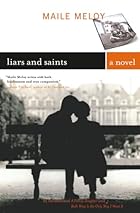
Liars and Saints by Maile Meloy (Jill)

Liars and Saints
By Maile Meloy

In her debut novel, Liars and Saints, Maile Meloy explores family relationships, deceit, truth and religion through the Santerre family. Spanning over four generations, each chapter is told from a member of the Santerre family - some get more of a voice than others, but each person is enveloped in the conflicts that rock the family.

The story opens with Yvette and Teddy Santerre during World War II. We learn that the couple are deeply in love, but their young marriage isn't without struggles, compounded by Teddy's deployment to the Pacific theater. Teddy is insecure and jealous of his beautiful wife, and Yvette wrestles with her roles as wife and mother. The couple have two daughters, Margot and Clarissa, and the story moves quickly to when the girls become teenagers, and a particular night that would change the family forever.

At the surface, the issues facing the Santerre family are the stuff of daytime soap operas, but Meloy writes so eloquently, you hardly notice. The family members individually grapple with truth versus deceit. Is it better to spill the beans or keep things discreet? Sometimes, the choices the family made were ones they want to hide (even from each other), while others need to be aired out. True to life, you don't know if it is a good idea to disclose a secret until after it's done. Hindsight is always 20/20.


Liars and Saints is a solid debut, and I am not surprised to find it on the Orange Prize short list (2005). It's not without flaws, but its pace and story development are spot on. I look forward to more stories by Maile Meloy. (  )

Sunday, June 24, 2012

Orange July 2012 Giveaways

This just in! Check out my blog post that lists the books I am giving away for Orange July 2012. I am giving away more than 20 books, including the entire 2012 short list.

The giveaways are open to all Orange July participants (NOTE: You must be signed up for Orange July 2012 to be eligible to win prizes). I also ship anywhere, and you can win more than one giveaway.

LINKS:
All About Orange July 2012
Orange July 2012 Giveaways
Mr. Linky (where you sign up for Orange July 2012)

If you have any questions, please email me at mrstreme@gmail.com. Thank you for participating in Orange July 2012!

Saturday, June 2, 2012

Orange July 2012


It's that time of year again! Orange July is here! Orange July is a biannual event where people around the world commit to read at least one Orange Prize nominee or winner.

For more details, please head over to my blog post!

Hope you can join the fun!

Saturday, June 18, 2011

UPDATE: Orange July Book Giveaways


Earlier this week, I posted the details for this year’s Orange July event and mentioned that I would be be back to list the books up for grabs. Well, here I am! Without further adieu, here are the books that will be given away during Orange July:

Click here to read more....

Sunday, June 12, 2011

Getting Ready for Orange July 2011


Hello Orange Prize Project participants! Today, I posted details about Orange July 2011 on my blog. Please come by and learn all the details, including how you can win great books during the event.

If you have any questions, please shoot me an e-mail at jillceleste AT hotmail.

Thanks for participating!

Tuesday, July 27, 2010

The White Woman on the Green Bicycle by Monique Roffey (Jill)

The White Woman on the Green Bicycle
By Monique Roffey
Did Not Finish


Sometimes, I can get hung up on a part of a story – to the point where it plagues my entire reading experience. This is what happened while reading The White Woman on the Green Bicycle by Monique Roffey.

The book is divided into chronological sections, starting with 2006 and then going back to 1956, 1963 and 1970. So, when Roffey introduces us to the main characters, George and Sabine, we are meeting their 75-year-old versions (with most of their lives’ experiences behind them). For the first 189 pages, it was difficult to like George and Sabine. George was a lifelong philanderer – selfish and egotistical. Sabine drank and smoked excessively, and liked to pick fights with George and their daughter. As I muddled through these pages, reminding myself that the book will reveal more about these characters, something happens. Sabine beats her family dog. The scene was only a few paragraphs long but affected me tremendously. So tremendously that as I moved to the earlier years of the characters’ lives, I could not forget what Sabine did.

120 pages from the end, I couldn’t bear reading about Sabine anymore. I was done with her. I placed my bookmark in front of the next chapter, put the book aside and thought about what to do next. Ultimately, I decided to walk away from The White Woman on the Green Bicycle.

Despite my abandonment of this book, I would be remiss if I didn’t mention Roffey’s writing talent and her fascinating exploration into Trinidad’s history. Indeed, many aspects of The White Woman on the Green Bicycle were appealing. Perhaps I can come back to it once I let go of my distaste for Sabine. Until then, The White Woman on the Green Bicycle will sit on my shelf; my bookmark marking the spot where I said no more.

Monday, July 19, 2010

The Septembers of Shiraz by Dalia Sofer (Jill)

The Septembers of Shiraz
By Dalia Sofer
Completed July 18, 2010


Dalia Sofer’s debut novel, The Septembers of Shiraz, shows how detrimental the Iranian Revolution was for many of Iran’s citizens. Isaac Amin was a rare gem dealer who was arrested by the Revolutionary Guards in September 1981. Isaac was Jewish and had prospered well under the Shah, which made him suspicious in the eyes of the new regime. He was transported to prison where he was questioned, tortured and accused of being a Zionist spy.

The story shifts from Isaac’s point of view to that of his wife, Farnaz; his young daughter, Shirin; and his son, Parviz, a college student living in New York. The alternating viewpoints showed how each family member dealt with the sudden disappearance of Isaac. With emotions ranging from fear to courage, the Amin family tried to manage their day-to-day lives without the presence of their patriarch.

I found The Septembers of Shiraz to be a captivating read. The Iranian Revolution is an unfamiliar topic for me, and the rigid conditions of this time make me wonder how anyone escaped arrest and execution. I rooted for each member of the Amin family as they struggled with Isaac’s imprisonment. Sofer’s writing style was lyrical yet approachable, drawing her readers into the story. If you are a fan of historical fiction, I would recommend this amazing story. I look forward to more books by this talented young author. ( )

Thursday, July 15, 2010

Small Wars by Sadie Jones (Jill)

Small Wars
By Sadie Jones
Completed July 14, 2010

In Small Wars, the second novel by Sadie Jones, explores the impact of “small wars” on countries, citizens, servicemen and their loved ones. When you read a novel by Jones, you expect an intensive read. Small Wars is exactly that – a novel that keeps you thinking about its characters long after finishing the book.

Hal Treherne is a young major in the British Army. He comes from a family whose men held distinguished careers in the army, fighting in great English wars throughout history. Hal has no war to fight, until he is stationed in Cyprus, a nation whose interest to England becomes exceedingly higher as the conflict in the Suez Canal erupts in nearby Egypt. Cyprus had a small war of its own, trying to break free of British rule. The country’s desire for independence resulted in terrorist activity, and Hal finally gets the war he’s been trained for. However, it’s not the war of his father or grandfather. There are no trenches, fronts or battlefields. Instead, it’s house-to-house searches, land mines and torture. Hal learns that he’s not emotionally equipped for this type of warfare and begins to question his service in the army.

Meanwhile, Hal’s wife Clara arrives in Cyprus with their twin daughters, and tries to create a life in this tumultuous country. At the beginning of the book, you sense a deep love between the couple. However, as conditions sour in Cyprus and Hal becomes traumatized by its events, you watch as this marriage crumbles. They fail to talk to each other, and Hal takes out the atrocities of the war on his wife. He eventually arranges for Clara’s departure to a “safer” part of Cyprus, but in a country involved in a small war, there are no safe havens. Eventually, Clara and Hal face an enormous tragedy that will make or break their marriage.

I was unaware of this portion of British history, and I found that Jones’ research about Cyprus during the 1950’s to be enlightening. I couldn’t help but draw parallels from the small war in Cyprus to those being fought in countries throughout the world today. The places have changed, but the lessons have not. I applaud Jones for tackling this sensitive subject and for doing so in such a provocative way. I would recommend Small Wars to those readers who enjoy reading intense fiction or books focused on military history. It’s a book that will leave its fingerprint on me for a long time. ( )

Saturday, July 10, 2010

The Accidental by Ali Smith (Jill)

The Accidental
By Ali Smith
Completed July 10, 2010

Truth be told, I don’t know how to fairly review The Accidental by Ali Smith. It’s a story that follows the dysfunctional lives of the Smart family and the emergence of Amber, a young woman who crashes the Smart’s summer home one evening. Amber’s presence helps members of the family deal with their individual grief, though the reader never quite learned why Amber was there.

The four Smart family members take turns narrating a chapter. My favorite chapters were told by Astrid, a young girl who likes to videotape everything. With a director’s eye and a stream of consciousness that James Joyce would appreciate, Astrid’s perspective matched her age: big ideas, rambling thoughts and a curiosity about life. Also interesting was her brother’s narrative: Magnus was depressed about the suicide of a fellow classmate and felt at blame for the girl’s death. Smith’s strength is not character development – you never get a full picture of each character – but the snippets she showed of the kids were insightful and captivating.

Smith’s writing style takes a while to get used to. You’re dropped into the middle of each character’s thoughts, and you might need several chapters (as I did) to get into the writing style. Admittedly, it’s not my favorite way of storytelling, and I felt it put up barriers around the characters and their stories. Additionally, the ending was disappointing, and after trudging through this book, I was hoping for something a little more gratifying.

It’s hard to recommend The Accidental because it was a “meh” book for me. I encourage future readers to look at other reviews before deciding on this book. I think it’s a book you either like or don’t; I hate to say that I am in the latter group. ( )

Sunday, July 4, 2010

Bel Canto by Ann Patchett (Jill)

Bel Canto
By Ann Patchett
Completed July 4, 2010

Imagine being held hostage for more than four months in a luxurious mansion in a South American country. Negotiations are at a stalemate, and the terrorists holding you are nothing more than a gang of armed teenagers led by three generals. You outnumber your captors, and they are pretty lax with their rules. Despite the odds, you never try to escape. Why? Because your life as a hostage allows you to become a new person – a person that you couldn’t be in your real life. It’s this theme that is the cornerstone to Bel Canto by Ann Patchett.

The group was assembled to celebrate the birthday of a Japanese industrialist, Mr. Hosokawa. They were foreign dignitaries, priests and government officials – and the character that tied them all together was Roxane Coss, the American soprano who was the evening’s entertainment. Once the terrorists invaded the mansion, it was Roxane who called the shots. She used her lovely voice as collateral and was able to negotiate shampoo, food and other amenities for her fellow captives. In turn, she sang for the terrorists and hostages – and they all fell under the spell of Roxane’s music.

Spending months together blurred the lines between the terrorists and hostages. Together, they played chess, took reading lessons, cooked and made love. The hostages, mostly older men, showed fatherly affection to some of the terrorists. With this attention, the teens began to blossom. A boy could sing, a girl could read, another could play chess. They transformed from being jungle children to individuals with hearts and souls – all wanting love and approval.

Bel Canto runs at a slow pace, which probably won’t suit many readers. However, if you love character-driven stories, this is the perfect book for you. My only complaint was the epilogue, which tied together some unnecessary loose strings. Sometimes, stories just need to end on its tragic note – because that’s what happens in real life. Other than this small flaw, I enjoyed Bel Canto and look forward to reading more fiction by the talented Ann Patchett. ( )

Sunday, May 30, 2010

Getting Ready for Orange July 2010

Orange Prize for FictionI am very excited about this year's Orange July, and I hope you all will join the fun. As a reminder, Orange July is when you commit to read at least one book that has won or been nominated for the Orange Prize.

As you think about what books to read, here are some helpful links:

Past Orange Prize Winners and Nominees
2010 Orange Prize Long List
2010 Orange Prize Short List
Orange Prize Project Blog
Orange January/July Facebook page
Orange Prize on Twitter
Orange January/July on Twitter

Hashtags:
#opf2010 - if you tweet about Orange Prize 2010
#ojj - if you tweet about Orange July

Are you planning on participating in Orange July? Make sure to leave a comment to let us know - and please spread the word on your blog, Facebook page or Twitter profile!


Sunday, April 4, 2010

Orange January/July is now on Facebook

Come one, come all to the fan page for the Orange January/July Facebook page.

This is an interactive fan page - feel free to post pictures, events, links or join the discussion group. Have fun!

Sunday, March 21, 2010

Results are in for Orange Prize Survey

Thanks to everyone who participated in the Orange Prize Survey. The results are in! Find out who you think should be on the short list, who should win and what your favorite Orange Prize book is.

Don't forget that we'll be celebrating all things Orange throughout July for Orange July! If there's an Orange book you want to read, it's a great time to delve in!

Thursday, July 30, 2009

American Wife by Curtis Sittenfeld (Jill's review)

American Wife
By Curtis Sittenfeld
Completed July 30, 2009

American Wife by Curtis Sittenfeld is, according to the author, 15 percent based on the life of former First Lady Laura Bush. I feel obligated to express that I am not a fan of George W. Bush’s presidency, and the quiet, submissive nature of the First Lady also bothered me. So, with this bias, I approached American Wife with much hesitation.

The story is told from the perspective of Alice Lundgren, a bookish Wisconsin teenager, who later married the boisterous Charlie Blackwell. Alice came off as intelligent, articulate and guilt-ridden throughout most of the story. She was plagued by a car accident from her teenage years, where she killed her love interest on the way to a high school party. Later, she was guilty about stealing her friend’s love interest (Charlie), Charlie’s drinking and drug use, the Blackwell family’s enormous wealth and the thousands of deaths resulting from the war that marked her husband’s administration. Sometimes, Alice acted upon her guilt and tried to make up for these situations; while other times, she kept her mouth shut.

Alice was very human, and her marriage to Charlie was quite realistic – a series of compromises and confrontations that made them a strong couple. Charlie was charismatic but needed the support of others to make decisions. He came across as rude and insulting at times, but when Alice dug her heels in (which was rare), he did concede without issue.

I will not venture to guess how accurately Sittenfeld’s characters depicted their real-life counterparts, but it did make for an interesting story. At times, American Wife was bogged down with too many details, and I wish Sittenfeld spent more time showing Alice as the governor and president’s wife. We learned so much about Alice through her younger years – I almost felt cheated not learning more about her in such public roles.

We will never know what made First Lady Laura Bush tick, but this book, if nothing else, reminds readers that we only see what the media and public relations people want you to see. Sometimes appearances are different than actuality. ( )